
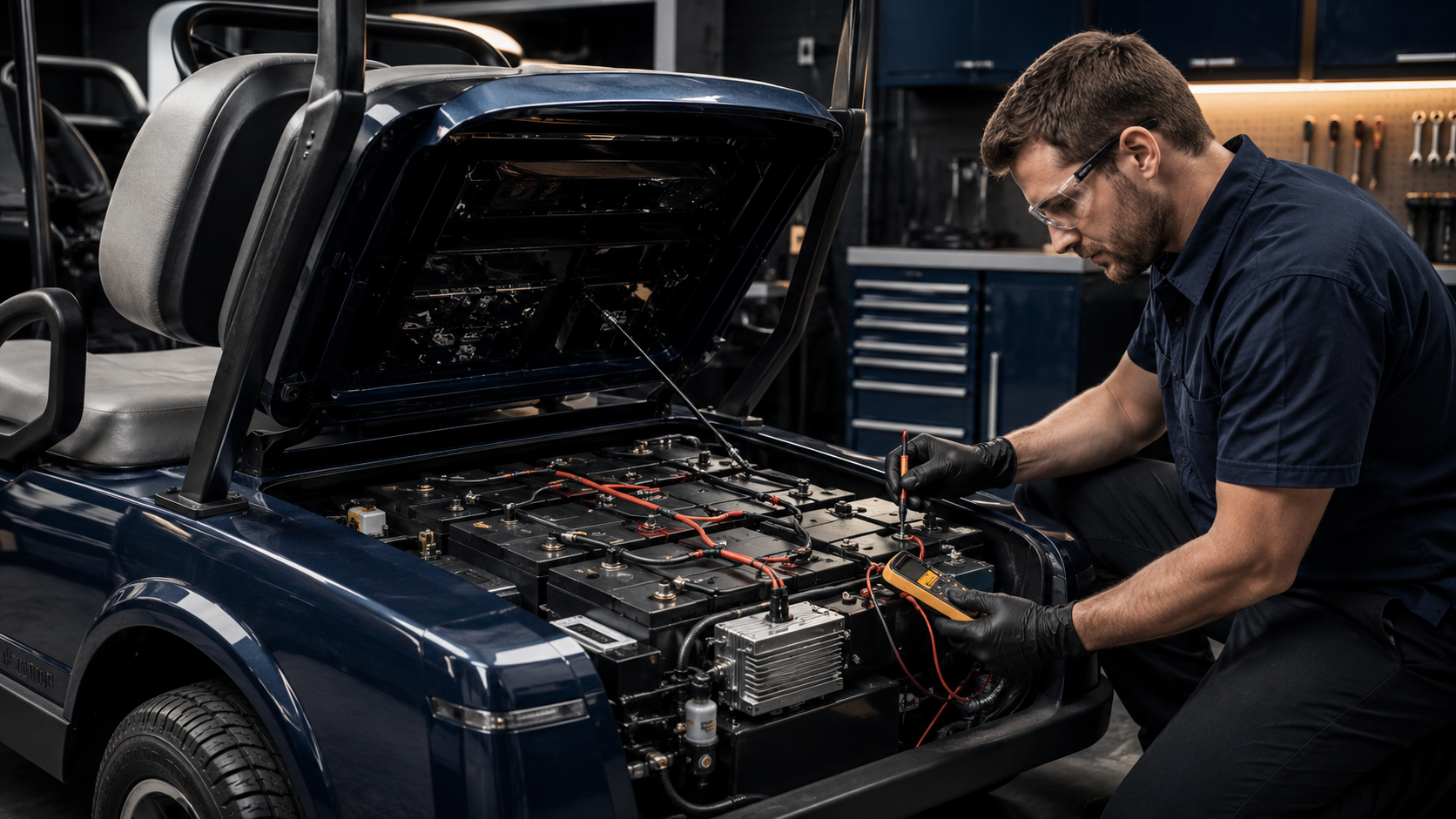
Electric Power & Battery Systems
Understand battery-pack configurations, lead-acid and lithium systems, charging behavior, testing procedures, cable condition, terminal care and common power-delivery faults.
A practical, self-paced course package covering electric and gas-powered golf carts — from tools, safety and battery systems to motors, controllers, drivetrains, brakes, steering, maintenance and structured diagnostics.
Designed for owners, hands-on learners and technicians who want organized technical reference material and a clear path through the major systems found in common golf cart platforms.
2 + 2
Bonuses + complementary materials
$29.99
USD · One-time payment
One-time payment · No subscription · Access is released after payment approval
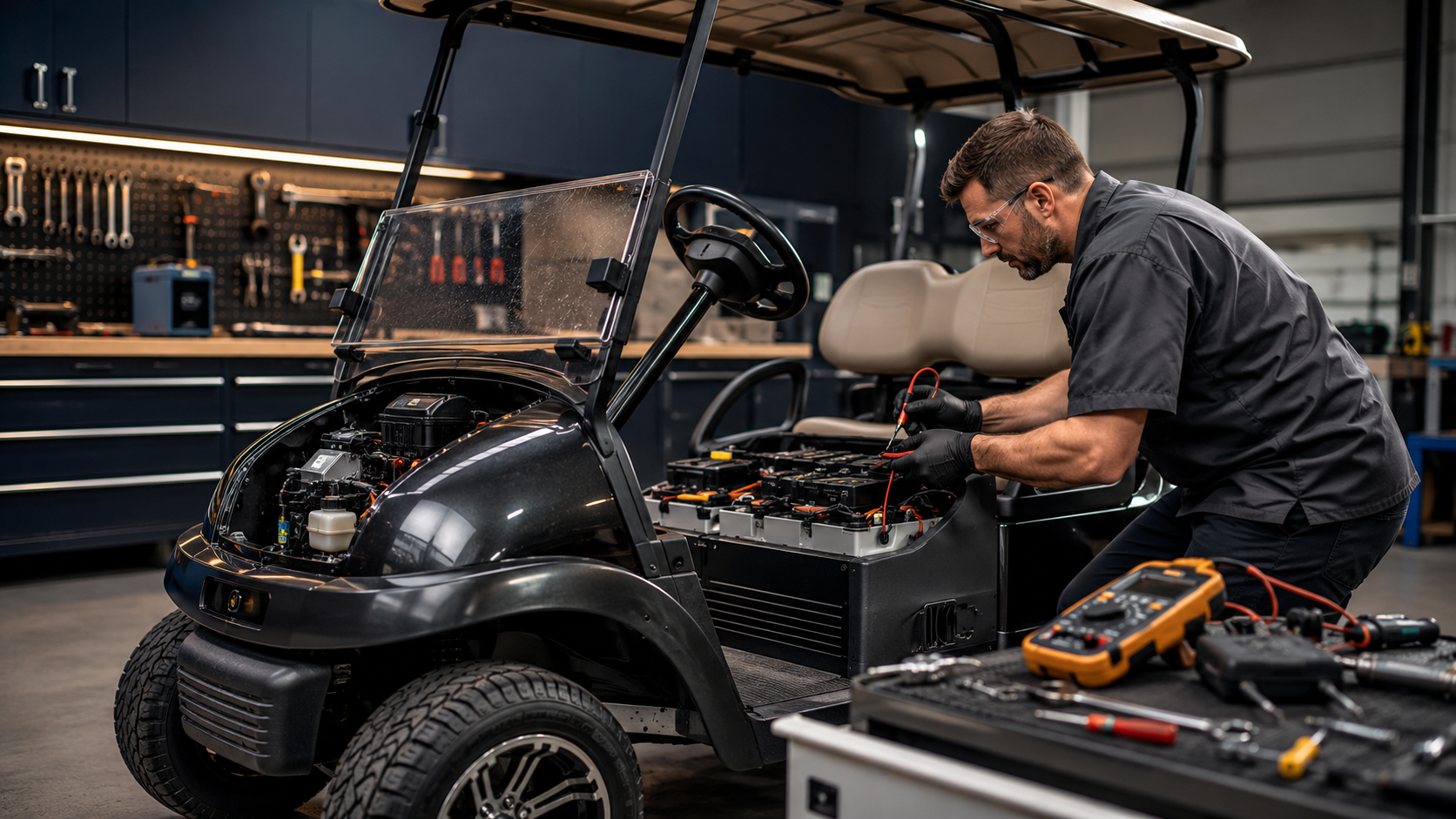
Electric + gas golf carts
Progressive, structured learning
Practical diagnostic methods
2 bonuses + 2 complementary materials
A structured course package covering the major electrical, mechanical and gas-powered systems found in golf carts, together with practical maintenance and diagnostic reference resources.
Understand battery-pack configurations, lead-acid and lithium systems, charging behavior, testing procedures, cable condition, terminal care and common power-delivery faults.
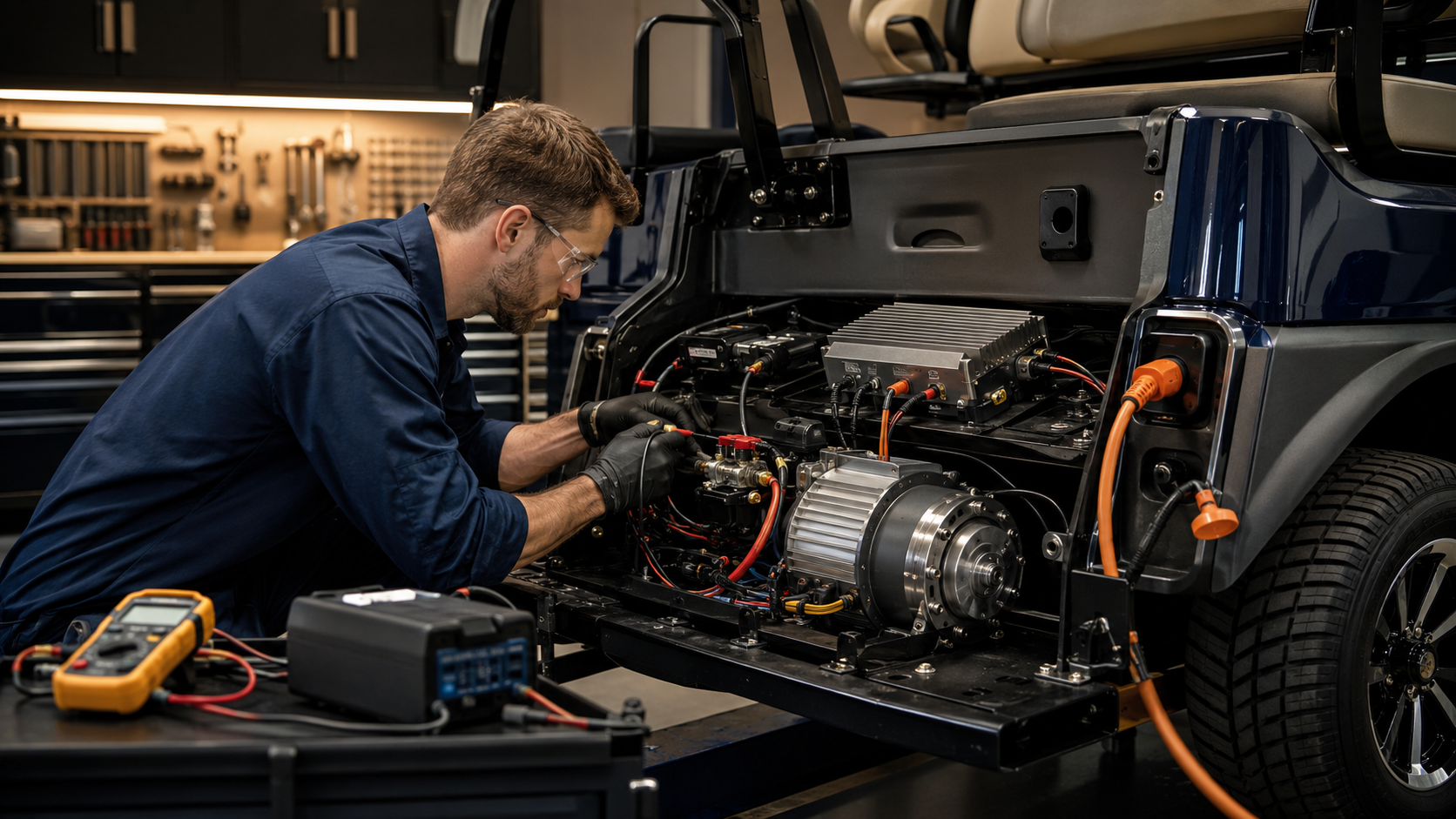
Explore DC and AC motor systems, speed controllers, solenoids, throttle inputs, onboard and external chargers, voltage testing and structured circuit diagnosis.
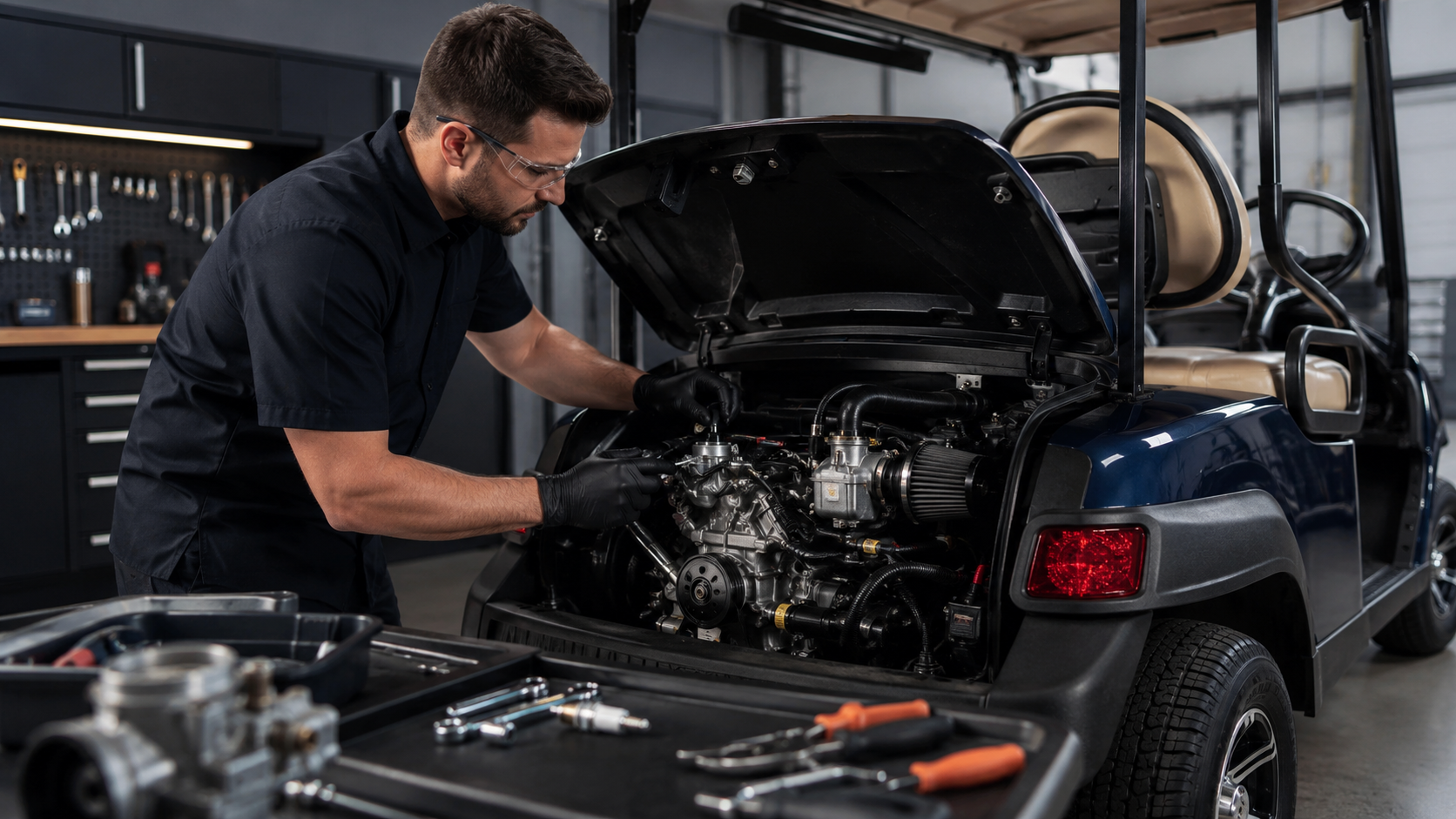
Review four-stroke engine operation, carburetors, fuel delivery, ignition, governors, valve clearance, compression testing, belts and common running problems.
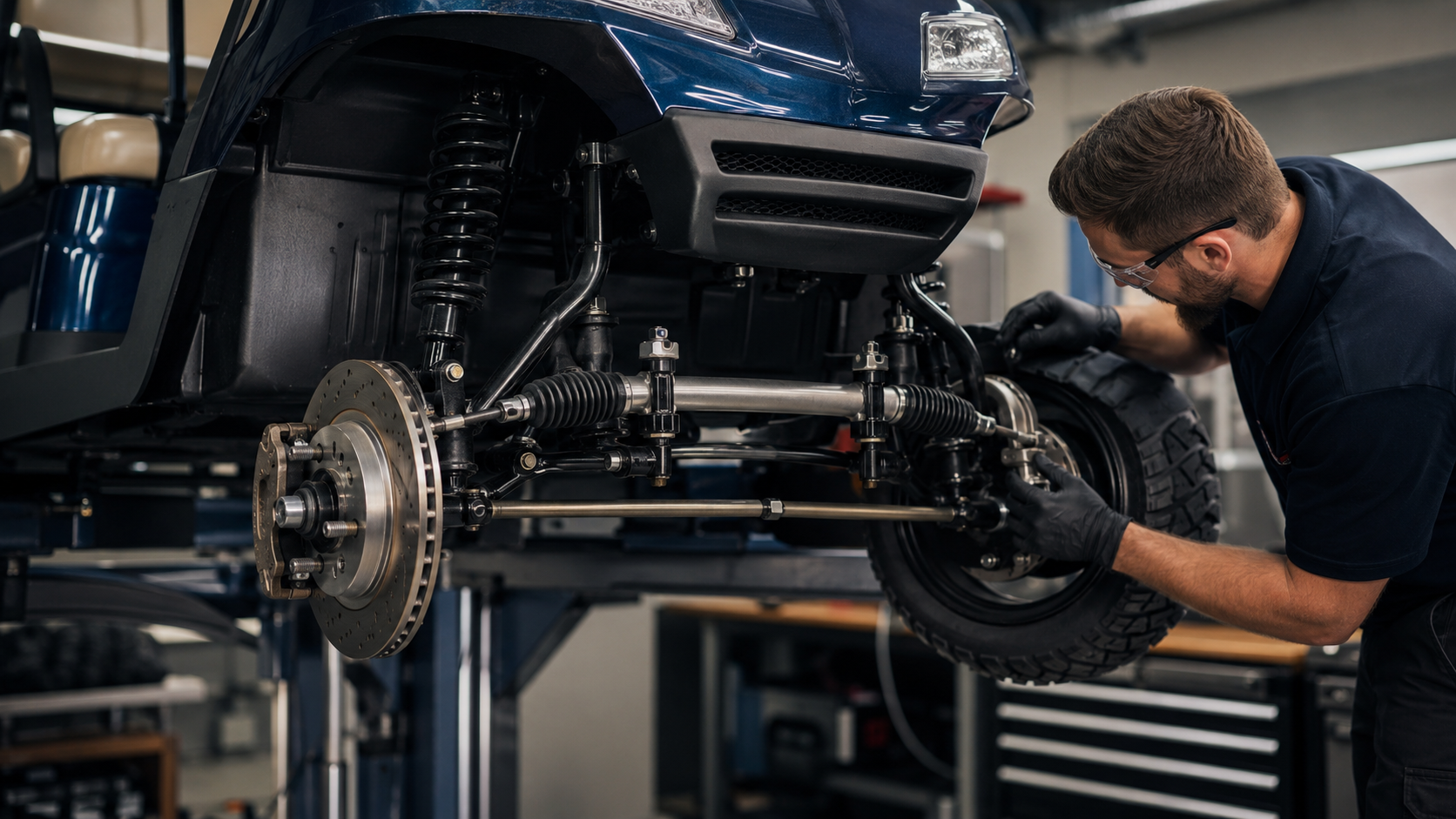
Study mechanical, hydraulic and regenerative braking, steering components, alignment, kingpins, tie rods, springs, bushings, shocks and practical inspection procedures.
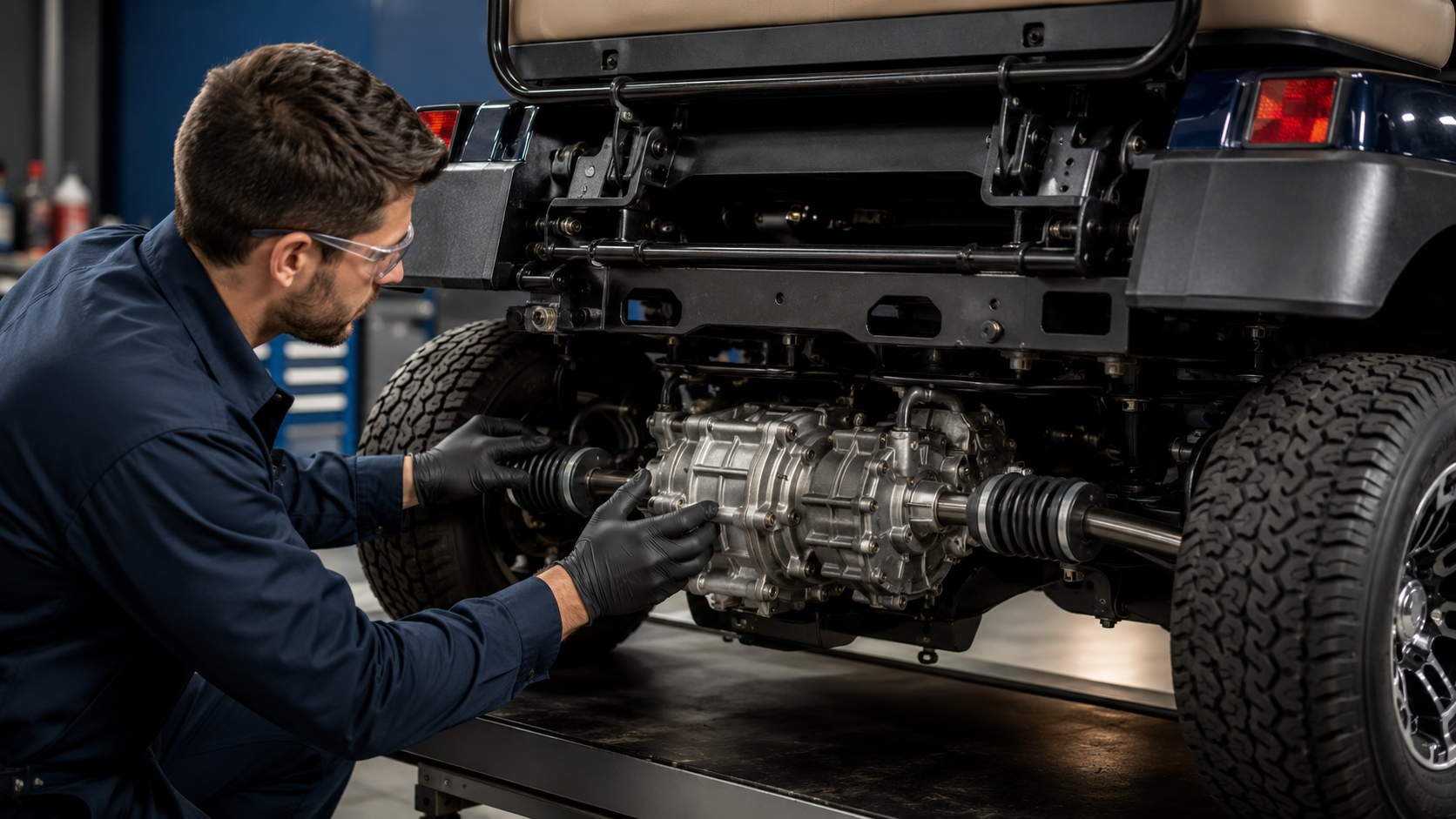
Learn how transaxles, differentials, axle shafts, CV joints, clutch and belt-drive systems transfer power, and how wear or lubrication problems affect operation.
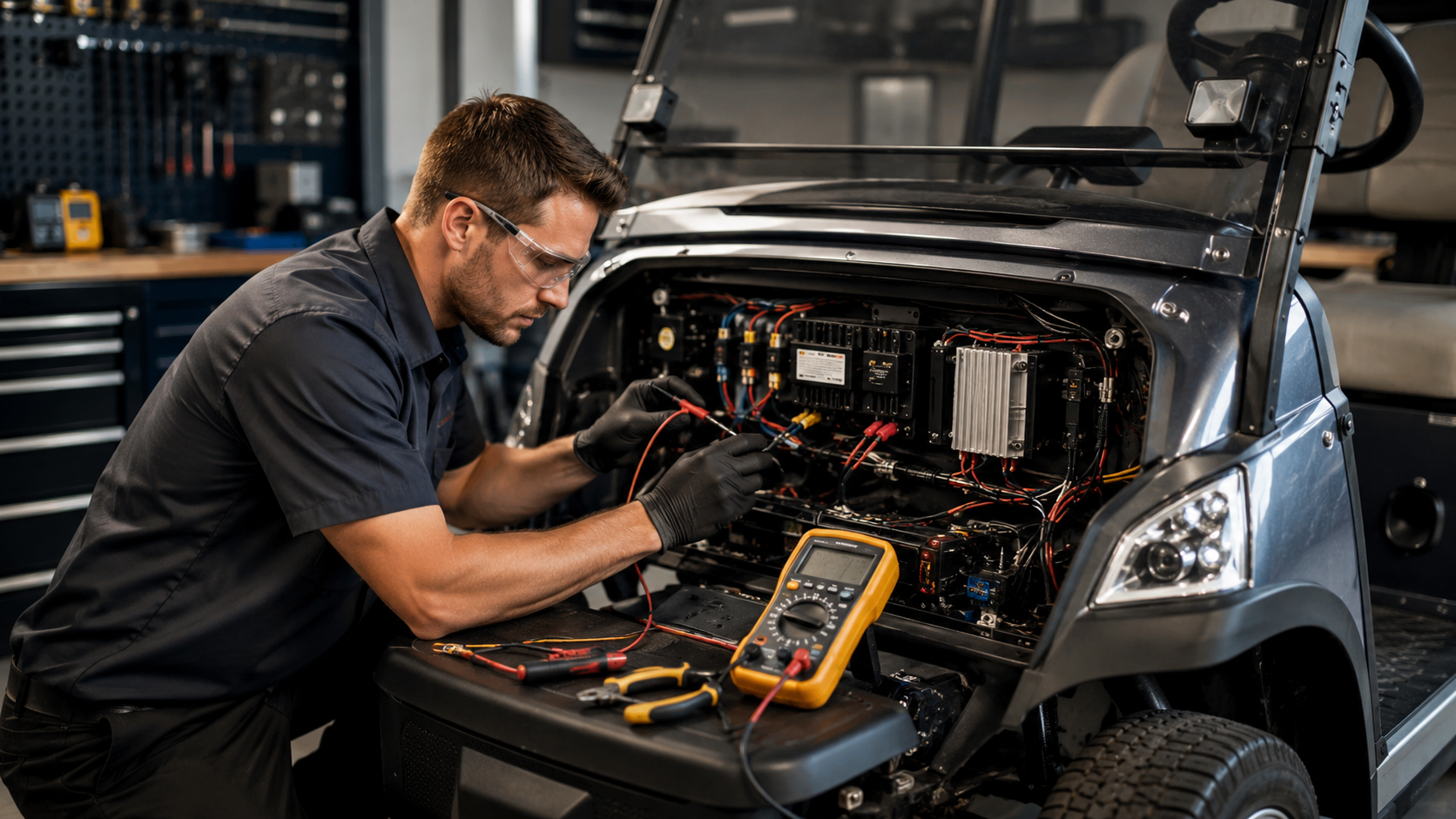
Follow logical troubleshooting workflows using multimeters, voltage-drop testing, continuity checks, fault codes, wiring diagrams, decision trees and post-repair verification.
Workshop organization, personal protective equipment, insulated tools, safe battery handling, lifting procedures and pre-service preparation.
Lead-acid, AGM, gel-cell and lithium battery systems, pack testing, balancing, replacement considerations and Battery Management System fundamentals.
Charging stages, charger connections, onboard charging systems, fault indicators, output testing and battery-versus-charger diagnosis.
Series-wound motors, AC systems, brushes, commutators, windings, motor connections, inspection and service considerations.
Controller operation, high-current switching, solenoids, potentiometers, ITS systems, microswitches and relevant fault patterns.
Wire tracing, continuity, voltage-drop testing, terminal inspection, corrosion, chafing, connector care and reliable repair practices.
Fuel tanks, filters, lines, carburetor circuits, spark plugs, ignition systems and logical diagnosis of starting or running problems.
Mechanical and electronic governors, valve-clearance inspection, compression testing, leak-down concepts and engine-health evaluation.
Drive belts, primary and secondary clutches, transaxle operation, differentials, lubrication and wear-related symptoms.
Mechanical drum brakes, hydraulic systems, regenerative braking, cables, shoes, adjustment, inspection and functional testing.
Rack-and-pinion and steering-box systems, tie rods, kingpins, toe alignment, looseness, pulling and tire-wear diagnosis.
Springs, bushings, shocks, lifted-cart considerations, body components, frames and visual inspection for damage or wear.
Tire condition, pressure, mounting, wheel service and proper use of torque specifications on safety-critical fasteners.
Platform identification, model-specific layouts, serial-number research and important differences across common golf cart brands.
Battery care, tire and brake inspections, cleaning, seasonal storage, pre-ride routines and scheduled service planning.
Diagnostic tools, fault codes, oscilloscope concepts, scan-tool workflows, wiring schematics and measurement-based troubleshooting.
Scheduled inspection routines, maintenance documentation, repair records and consistent service procedures for frequently used carts.
Structured post-repair checks, safe road testing, confirmation measurements and documentation before returning a cart to service.
Checkout is completed through Hotmart. Access is released after payment approval.
The material is organized as a single learning path — you move from fundamentals to structured diagnostics at your own pace.
Tools, workshop preparation, safety habits, golf cart platforms and how the main electric and gas systems work together.
Batteries, chargers, motors, controllers, solenoids, wiring, brakes, steering, suspension, tires and drivetrain service work.
Multimeter measurements, voltage-drop testing, load testing, fault isolation and interpreting symptoms methodically instead of guessing.
Preventive maintenance routines, symptom-based review, component identification and consistent verification after every repair.
The full Golf Cart Repair Course plus 2 bonuses and 2 complementary materials.
$29.99
USD
Your access includes two practical bonus resources and two detailed complementary reference materials that expand the material covered in the main course.
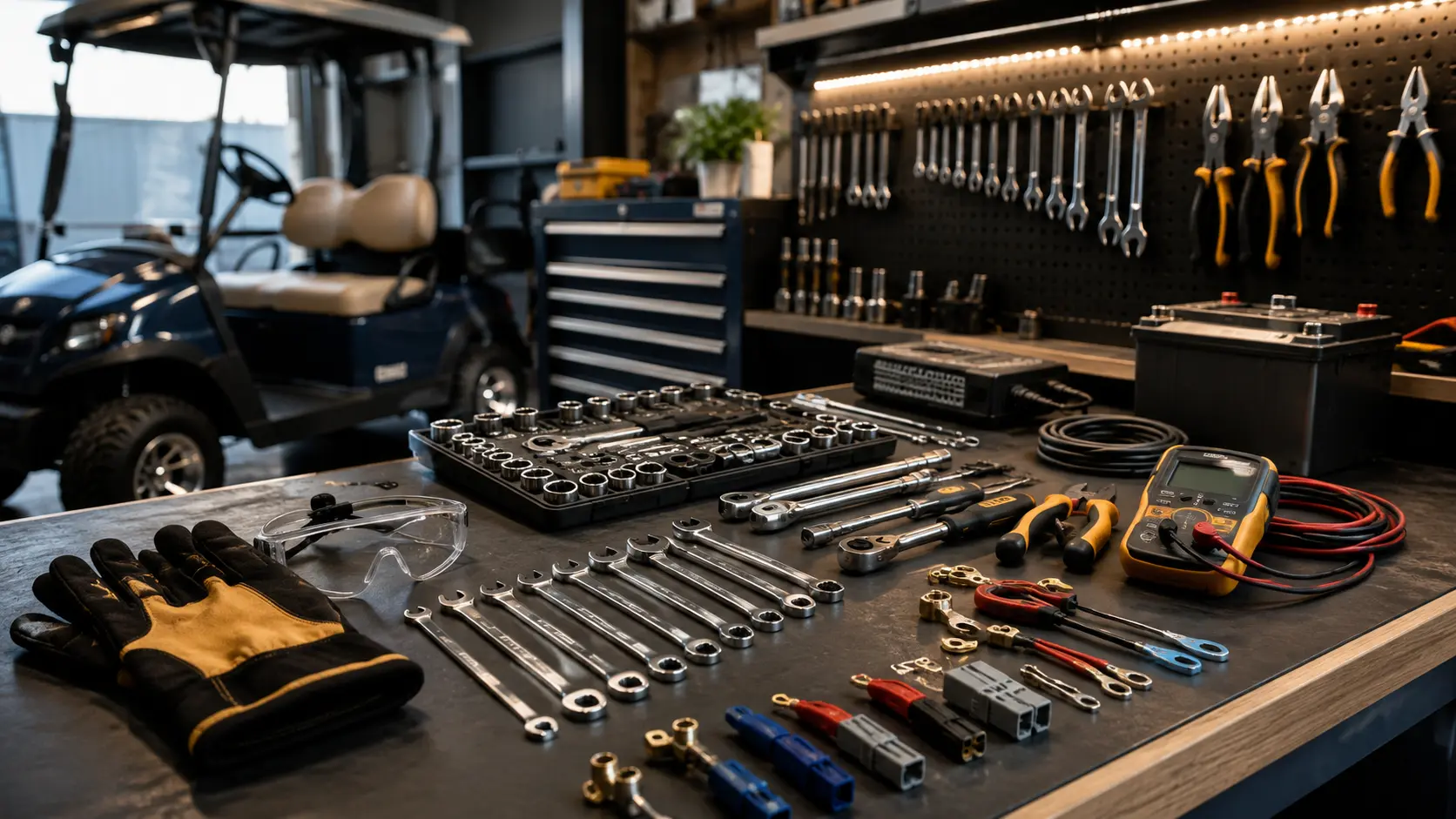
Bonus 1
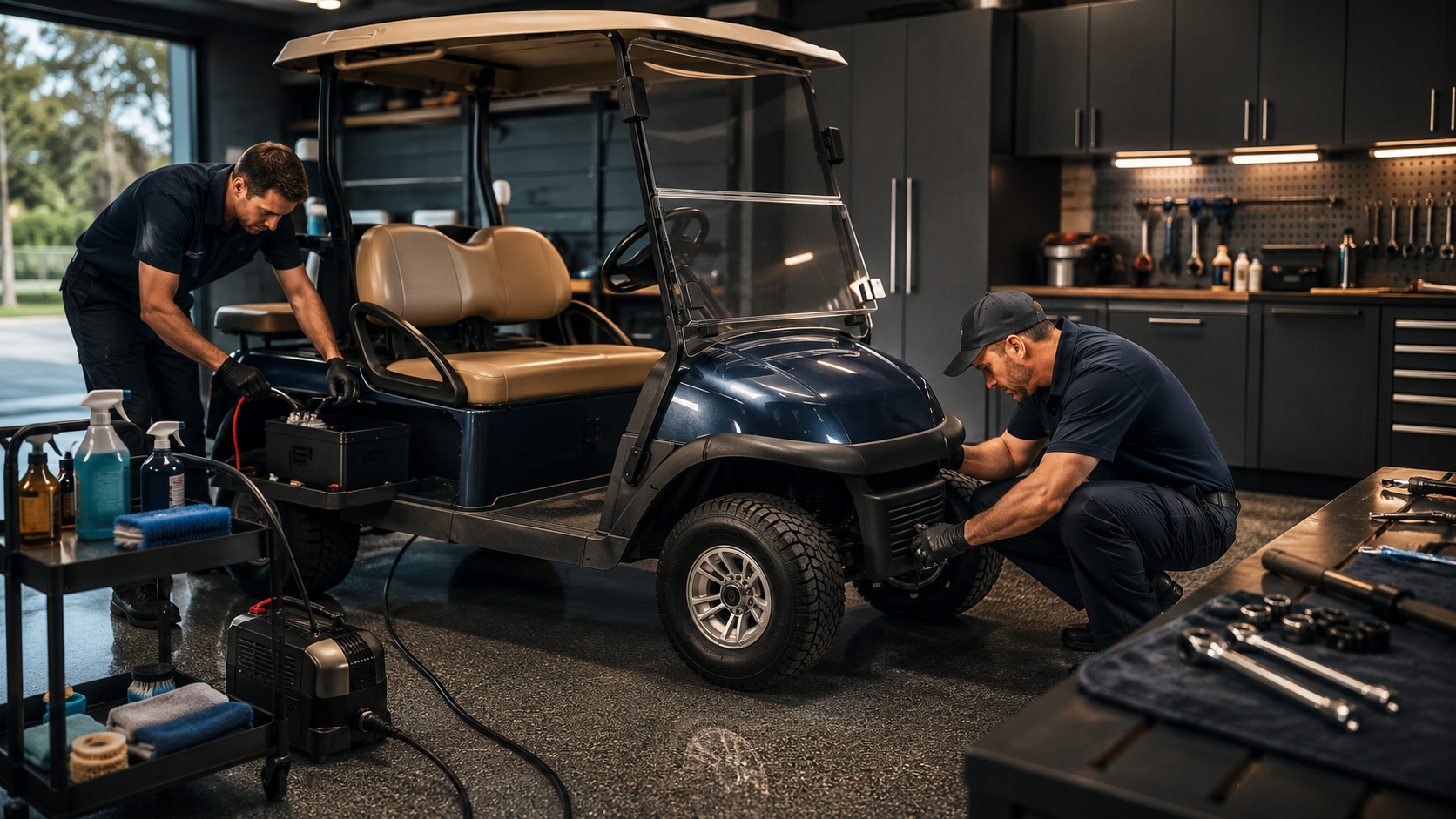
A practical reference covering workshop setup, personal protective equipment, essential hand tools, multimeter use, battery handling, cable and connector inspection, safe lifting, cleaning practices and a prioritized starter-toolkit checklist.
Bonus 2
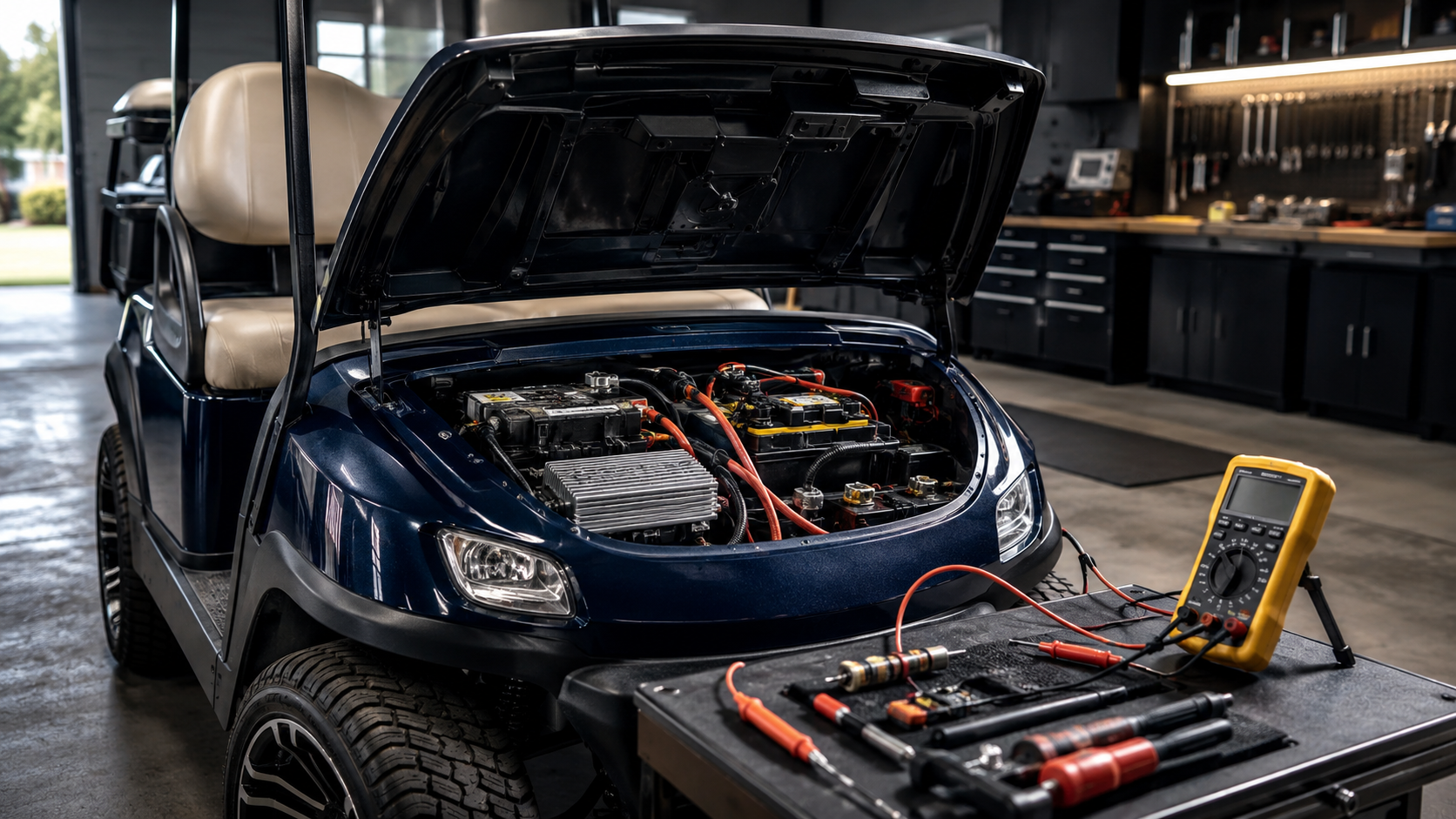
A maintenance companion covering battery care, tire pressure and inspection, brake checks, cable and charger care, cleaning routines, pre-ride checks, monthly inspections, storage preparation and gas-cart maintenance.
Complement 1
A symptom-based troubleshooting reference for no-power conditions, carts that will not move, sluggish performance, weak batteries, charger faults, clicking sounds, brake problems, corroded cables, overheating, controller faults, motor issues and wiring failures.
Complement 2
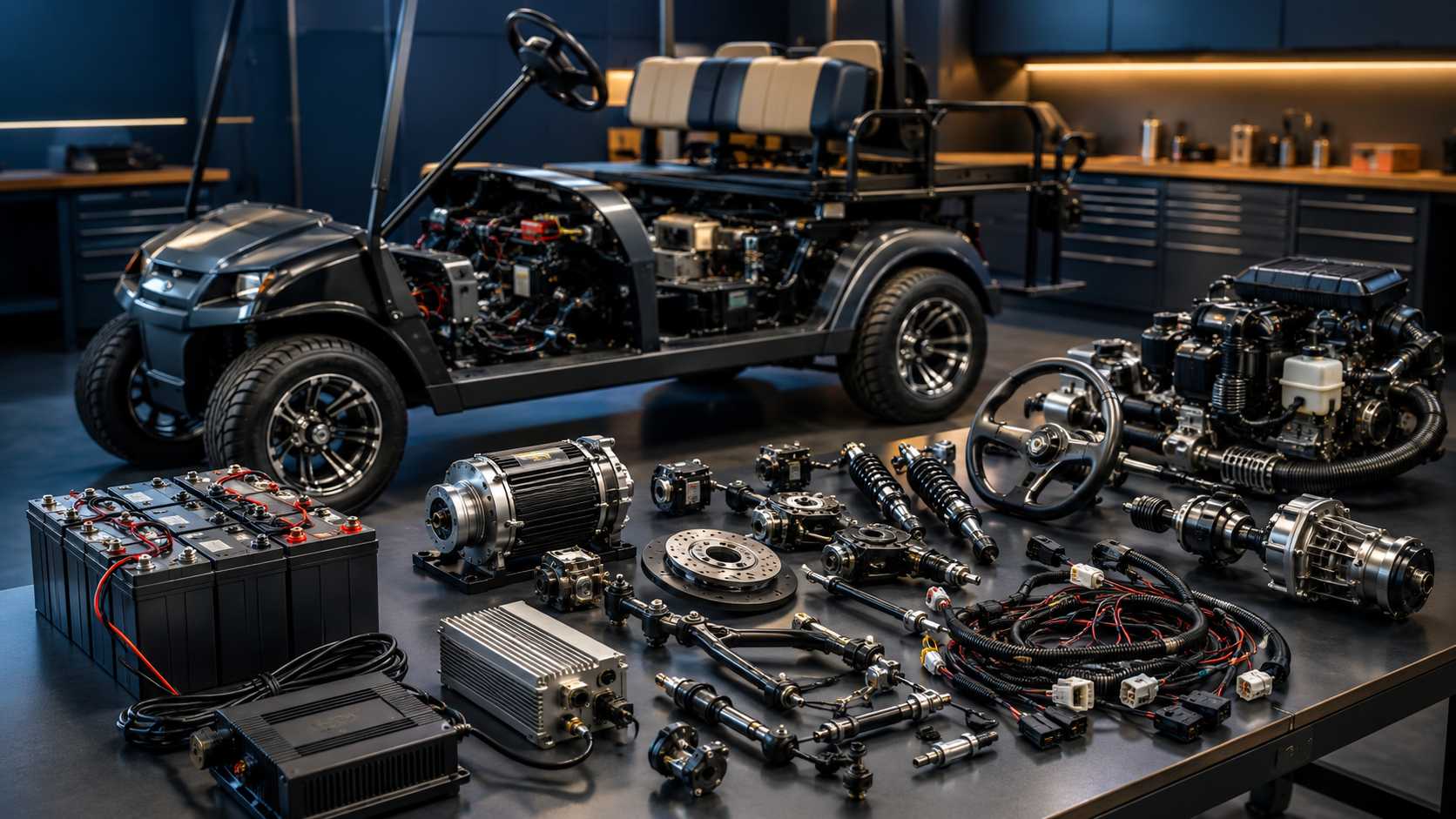
A visual and technical reference for identifying battery systems, charger ports, motors, controllers, solenoids, transaxles, brakes, steering, suspension, wiring, connectors and major gas-cart components.
2
Bonuses included
2
Complementary materials
SELF-PACED
Course access
All bonuses and complementary materials are included with your course access at no additional cost. Access is released after payment approval.
Golf cart service involves electrical, chemical and mechanical hazards. The course emphasizes safe procedures throughout — and stopping when a task goes beyond your experience or tools.
Battery packs can deliver very high current. Follow correct disconnect procedures, use insulated tools and avoid bridging terminals.
Lead-acid batteries can release hydrogen gas and contain corrosive electrolyte. Handle, charge and clean them carefully.
Use eye protection, gloves and appropriate clothing whenever you work on electrical, fuel or mechanical components.
Place the cart in tow or maintenance mode and isolate power before servicing motors, controllers or wiring.
Work in a well-ventilated area, especially around charging batteries, fuel systems and running gas engines.
Use proper jacks, stands and support points. Never rely on a single jack when working under a cart.
If a repair requires tools, equipment or experience you do not have, stop and consult a qualified technician. Always follow the manufacturer’s instructions and the safety requirements that apply where you work.
Understand your own cart, handle routine maintenance and know what is happening before a problem gets worse.
Work through electrical and mechanical systems step by step, with clear explanations and inspection routines.
Reference material for carts you are servicing, upgrading, restoring or maintaining as a personal project.
A structured technical reference for systematic diagnostics, component identification and consistent procedures.
A structured learning package designed to help you understand major golf cart systems, organize technical information and approach maintenance or diagnosis more methodically.
Move through tools, safety, batteries, electrical systems, gas engines, mechanical components, maintenance and diagnostic workflows in an organized sequence.
Use safety checklists, maintenance guidance, symptom-based troubleshooting and parts-identification references alongside the main course material.
Review the topics on your own schedule and return to relevant sections when working through a maintenance or diagnostic question.
Receive the Golf Cart Repair Course together with two bonuses and two complementary reference materials in one purchase.
Refund requests can be submitted within 7 days through Hotmart, subject to the applicable Hotmart terms and the requirements that apply in the buyer's location.
Refund handling is managed by Hotmart. The period and conditions shown in your checkout or purchase details apply.
Get the Golf Cart Repair Course together with two practical bonuses and two complementary reference materials.
$29.99
USD
One-time payment · No subscription · Access after payment approval
Checkout is processed through Hotmart.
Your payment and checkout are processed by Hotmart, a platform for digital products.
Available payment options are shown by Hotmart during checkout and may vary by country, currency or account.
After Hotmart confirms the payment, access instructions are sent using the email entered during checkout.
Review the course and included reference resources according to your own schedule.
Golf cart service can involve electrical, fuel and safety-critical systems — see the full educational notice in the DISCLAIMER section below.
Self-paced course · One-time payment · Checkout through Hotmart